Withdrawing From a Minnesota Public School to Homeschool: The 15-Day Rule, Step by Step
By My Learning Source · November 28, 2026 · Guides, Tips
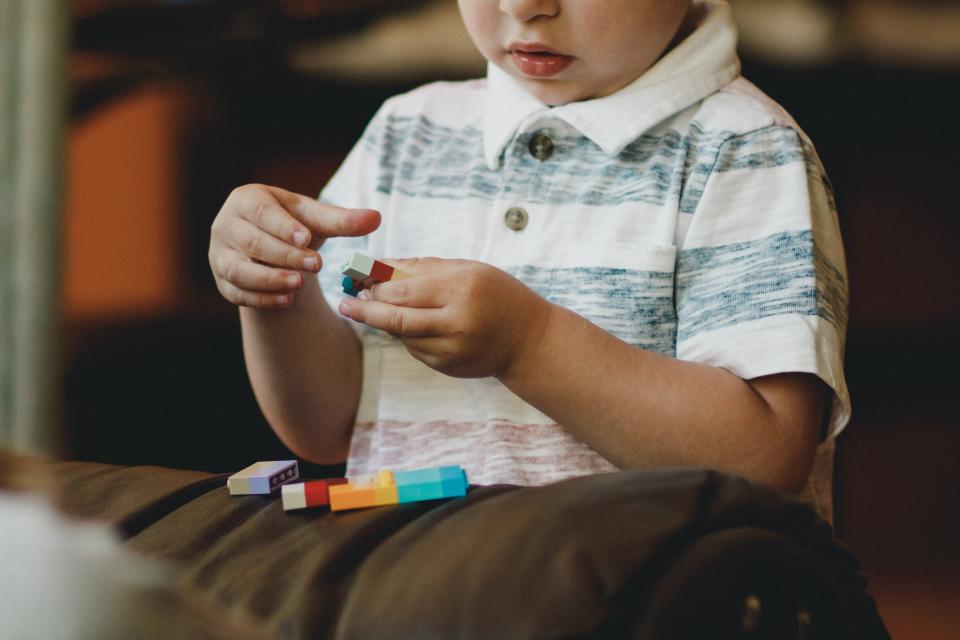
Families pull children out of school in October, in January and the week after spring break. Minnesota law expects that. It doesn't make you wait for a new school year, and it gives you a short, specific deadline to get your paperwork in. Here's the order to do things in. Our Minnesota homeschool options guide has the statutes and links.
The rule that matters most
Under Minn. Stat. 120A.24, the initial report is due within 15 days of when a parent withdraws a child from public school after age 7 to provide instruction in a nonpublic school that isn't accredited. A home school is a nonpublic school for this purpose. Fifteen days is not long, so get your pieces ready before the last day of school.
Before you withdraw
- Decide which instructor option you'll use under Minn. Stat. 120A.22, subdivision 10, and find the proof — for example, a copy of your bachelor's degree.
- Pick the nationally norm-referenced achievement test you intend to use.
- Find your child's immunization record.
- Find the name and address of the superintendent of the district where you live.
Step 1: Tell the school in writing
Send the principal or attendance office a short letter or email: your child is withdrawn as of a specific date to receive instruction in a home school under Minn. Stat. 120A.22 and 120A.24. Keep a copy.
This step protects you. The reporting law requires principals to give the superintendent, within 15 school days after each term starts, a list of students who were enrolled last term and aren't enrolled now, unless the school has been told the student enrolled in another school. Districts must also notify the county welfare agency about students dropped from the roll for unexcused absences of more than 15 consecutive school days. A clear written withdrawal keeps your child off those lists.
Step 2: Send the initial report within 15 days
Send it to the superintendent of your resident district — which may not be the district your child attended, if you used open enrollment. Include your child's name, birth date and address; the annual tests you intend to use; the name of each instructor; and evidence that each instructor meets one of the five options. The superintendent may offer an online form but can't require you to use it.
Step 3: The immunization statement
Minn. Stat. 121A.15 says home school parents submit immunization statements — or an exemption statement — to the superintendent by October 1 of the first year of homeschooling in Minnesota and of the grade 7 year. If you withdraw mid-year, the school already has a record, but ask the superintendent's office whether it needs a copy with your report. Sending one costs nothing.
Step 4: Ask for copies of records
Request copies of report cards, state and district test results, any evaluation reports, and the IEP or 504 plan if your child has one. For a high schooler, ask for an official transcript of completed courses. You'll want these for your own records, for placement if your child ever returns, and for college applications later.
Kindergartners and children under 7
Minn. Stat. 120A.22, subdivision 6, says a child under 7 who is enrolled in public kindergarten or a higher grade becomes subject to compulsory attendance unless the district has a policy exempting children under 7. In a district where that rule applies, a parent can withdraw the child for good cause by notifying the district, and good cause includes enrolling the child in another school. Once withdrawn, the child is no longer subject to compulsory attendance. The initial report is then due by October 1 of the first school year after the child turns 7.
Teens 16 and 17
The yearly letter of intent and test cover children 7 through 16, and also 16- and 17-year-olds whose initial report was filed after they turned 16. So if you file the initial report for a 16-year-old, the yearly requirements continue through 17.
Subdivision 8 of 120A.22 also says a 17-year-old who seeks to withdraw from school, and the parent, must meet with school staff about available options and sign a written election to withdraw. That subdivision is written for students leaving school; ask the district how it handles a 17-year-old moving to a home school.
If your child has an IEP
Leaving public school doesn't end your child's eligibility for special education. Under Minn. Stat. 125A.18, a resident who is eligible for special instruction and services may not be denied them on a shared-time basis because the student attends a nonpublic school, and Minnesota's definition of nonpublic school includes home schools. The district decides where services are provided. Ask before you withdraw what it can offer.
If you come back later
A child can return to public school. If your child enrolls full time, you give the school the child's scores on the yearly tests and the other documents the school requires to decide placement and which course requirements apply. Keep your test results and records in one place for that reason.
A family's November
Dana Pierce withdrew her 11-year-old from a middle school in Hermantown in early November after months of trouble. She emailed the principal a two-sentence withdrawal notice on a Friday, mailed her initial report to the superintendent the following Wednesday with a copy of her bachelor's degree, and asked the school for copies of her daughter's report cards and test results. The district wrote back confirming receipt. They spent the first two weeks reading and visiting the library before starting a math program.
(A composite example — names and details are illustrative, drawn from situations homeschool families commonly describe.)
Questions families ask
Do I have to finish the semester first? No. The 15-day clock starts when you withdraw.
Does my child need to be tested this year? The yearly test applies each year to children 7 through 16 who aren't in public school. Agree with the superintendent on which test and where it's given.
Who do I send the report to if we open-enrolled? The superintendent of the district where your child lives.
The checklist
- Gather instructor evidence, test choice and immunization record.
- Send a written withdrawal notice with an effective date.
- Mail or email the initial report within 15 days.
- Include or confirm the immunization statement.
- Request copies of records, the IEP and any transcript.
- Start a records folder for this year.
- Calendar October 1 for next year's letter of intent.
Find curriculum, tutors and therapists in our Minnesota vendor directory, and talk with families who've made the same switch in the My Learning Source Community. Homeschool days and classes are on the Minnesota Education Calendar.
My Learning Source is an independent marketplace and is not affiliated with the Minnesota Department of Education, any Minnesota school district or the Minnesota Legislature. District procedures vary — confirm with your superintendent's office how it accepts reports and records requests. Family examples are composites, not real individuals.